Wednesday, 16 February 2011

Fractals

Fractals are infinitely complex and beautiful patterns produced through the repetition of a simple formula or shape, patterns which often appear rough or chaotic and which can be found everywhere in nature (the surface of the sea, the edge of a cloud, the dancing flames in a wood fire). I have written about them briefly before.

What appeals to us in such patterns, perhaps, is the combination of simplicity and complexity. They allow our minds scope to expand, and our imaginations to take off in the direction of the infinite, but at the same time to rest in a unity. It is similar to the reason we love science. Scientists are seeking the simple secret at the heart of the complex - the formula or combination of universal laws that governs all of reality and explains why it works or appears the way it does.

Something similar is happening in art, when the artist seeks unity of concept or meaning or mood in a complex scene or sight or landscape.

Not all beauty is produced by these "recursive algorithms" or the repetition of self-similarity at different scales of magnitude. Sometimes a pattern is just there in the thing and does not repeat itself. But beauty always has something to do with order, which means the finding of a unity of form in something complex - a balance between the Many and the One. The finding of unity gives us joy (which is why we call it beautiful) because it enables us to recognise the Self in the Other, outside ourselves. It causes us to expand our boundaries to include the other thing as grasped and understood, or at least as situated in a relationship to us. Fractal patterns are a version of that experience. We sense the unity, but because it is expressing itself as never-ending complexity, it never gets boring.

Therefore all beauty, including fractal beauty, reminds us of God, who is both infinitely simple (in himself, as pure love) and yet infinitely complex (in what he contains and creates).

Tuesday, 15 February 2011

Child-centred education: 3

We all know there is a child still within us. That child has many aspects. It is ignorant, selfish, immature, confused. It may be desperately in need of love it has never received. But it is innocent and pure. I think it was in that sense that Georges Bernanos wrote, “What does my life matter? I just want it to be faithful, to the end, to the child I used to be.”

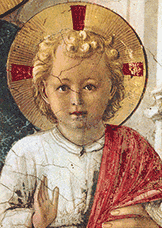
Christianity has given a particular importance to childhood. It certainly transformed, over time, the way children were perceived in classical civilizations. From the statement of Christ, “Whoever does not receive the kingdom of God like a child shall not enter it” (Mk 10:15), it followed that there was something valuable and to be imitated in the state of childhood. Normally children are told to grow up and become like adults, not the other way around. Childhood is an undeveloped stage, but in some ways it also represents a more perfect state, in which we

Wednesday, 9 February 2011

Child-centred education: 2

More notes from a work in progress.

Another great figure in child-centred education is Rudolf Steiner (d. 1925), the founder of a school of spiritual philosophy called Anthroposophy and the inspiration for around 1000 Waldorf Schools around the world, including this one in Edinburgh. The schools began in 1919 when Steiner was invited to create one for the children of workers at the Waldorf-Astoria cigarette factory, based on the ideas in his 1909 book, The Education of the Child. Steiner believed in the need to educate with the spiritual as well as emotional, cultural and physical needs of children in mind, and believed that they progress through a series of developmental stages corresponding to the evolution of human consciousness itself. Abstract and conceptual thinking develops late, around the age of 14, and so the early years are more focused on art, the

Thursday, 3 February 2011

Child-centred education: 1

Notes from a work in progress.

Insight into the true value of the child can be traced back to Christ, though it has to be said it remained mainly implicit during most of the succeeding centuries, and before the eighteenth century childhood was often considered merely a stage of weakness and immaturity to be got through as quickly as possible. We'll come back to the child later in this series. The modern period saw a transformation of educational theory and practice. In the wake of Jean-Jacques Rousseau (d. 1778) and the Romantics, most developments reflect a greater respect for the nature and natural development of the child. Rousseau himself – not a great educator, but a considerable influence through his novel Emile – believed in the natural goodness and value of the child,

Sunday, 23 January 2011

Beyond Physics

The relationship between physics and metaphysics (literally "beyond physics") is a fascinating one. It helps sometimes to remember that we can approach God from the side of philosophy and not just on the basis of revelation. Terry Pratchett, the English fantasy writer who has sold more than 60 million books and once said he was "rather angry with God for not existing", in a more recent interview ventured the view that "It is just possible that once you have got past all the gods that we have created with big beards and many human traits, just beyond all that, on the other side of physics, they [the gods] just may be the ordered structure from which everything flows." Indeed, the Christian idea of God, properly understood, is of something that could not not exist, if the world is to make any kind of sense.

Ever since 2006 in Regensburg, Pope Benedict XVI has spoken about the need for "broadening our concept of reason and its application". But what

Saturday, 15 January 2011

Music unforgotten


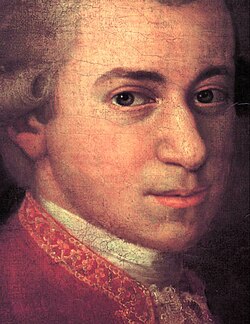
Listeners to Radio Three had a treat over Christmas. The BBC devoted twelve solid days and nights to playing everything composed by Mozart. What struck me is how, where Beethoven comes over as emotional, heroic and tragic, and Bach as mathematical, angelical and lyrical, Mozart often seems simply “playful”. But this may be connected with the reason his music is so profound. It resembles nature, in the sense of natura naturans (“nature naturing”, or doing what nature does). In nature, creative freedom always manifests a law – but the deepest law of all is the pure ebullient spontaneity of the Good.

John Tavener said of Mozart (in the programme notes for Kaleidoscopes in 2005):

I have always regarded Mozart as the most sacred and also the most inexplicable of all composers. Sacred, because more than any other composer that I know, he celebrates the act of Being; inexplicable, because the music contains a rapturous beauty and a childlike wonder that can only be compared to Hindu and Persian miniatures, or Coptic ikons.

In an essay in the Winter 2006 issue of Communio, Fr Jonah Lynch sees in Mozart a kind of Catholic balance that reflects the paradox of the Incarnation:

Mozart’s melodies carry something of the birth of an infant God, the remarkable union of opposite absolutes, total simplicity and infinite depth. Only here is the completely free and ever-surprising united to formal structural perfection.

The work of Mozart and the other great composers echoes the “unforgotten music” that we carry in our bones. It opens our senses, so that we feel the air of Paradise – what Josef Pieper in Only the Lover Sings calls the “paradise of uncorrupted spiritual forms” – and notice the fragrance that still clings to our coats of skin. Perhaps it is not too much to suggest that when we hear this music, even if like the Good Thief we are still hanging on the cross, we become more conscious of the possibility of grace.